ESTUARY EXPERTS

ESTUARY EXPERTS

Wednesday, November 9, 2016

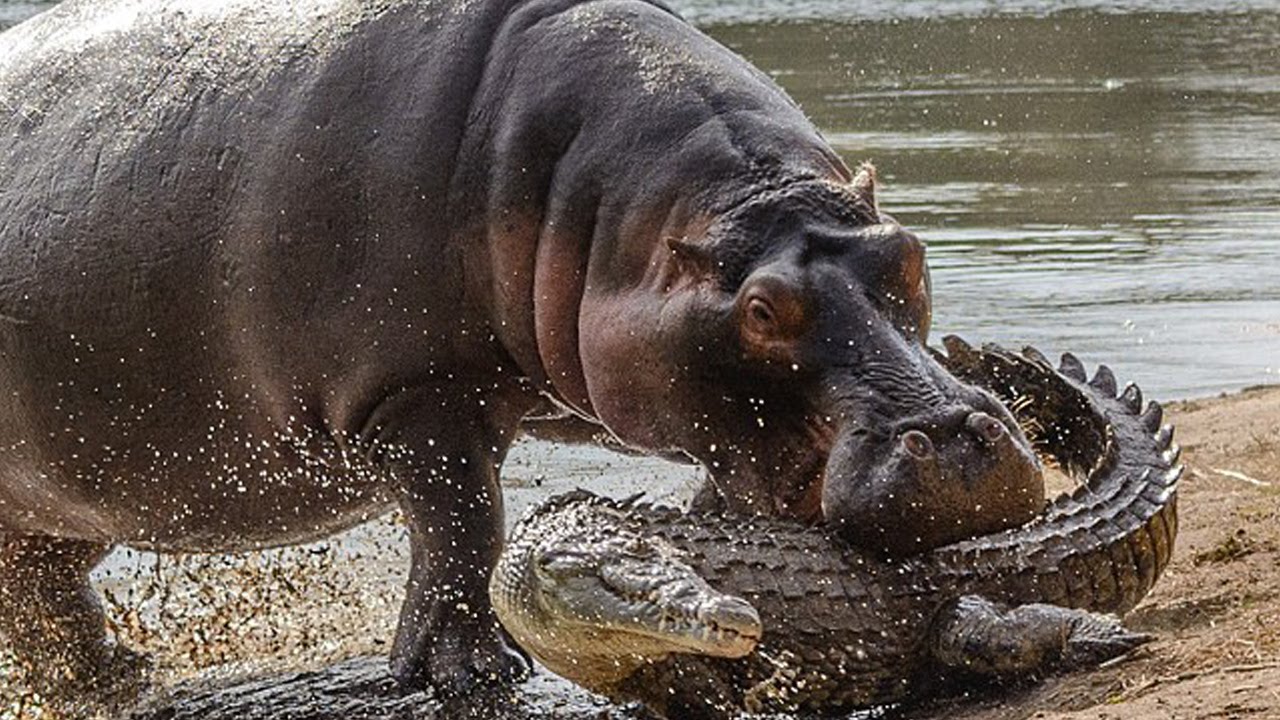
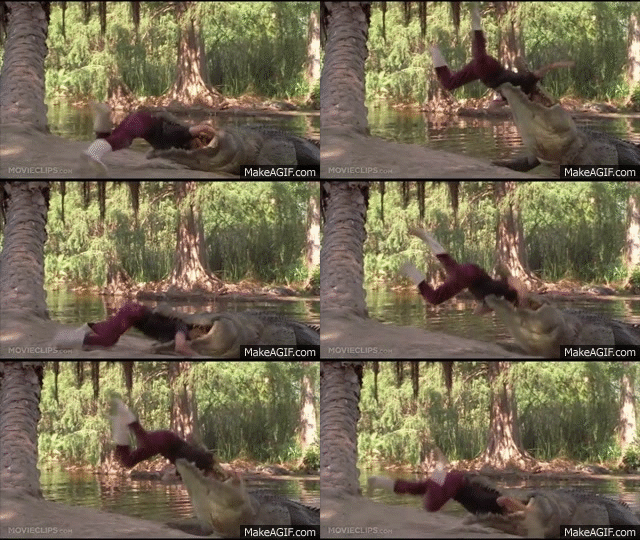
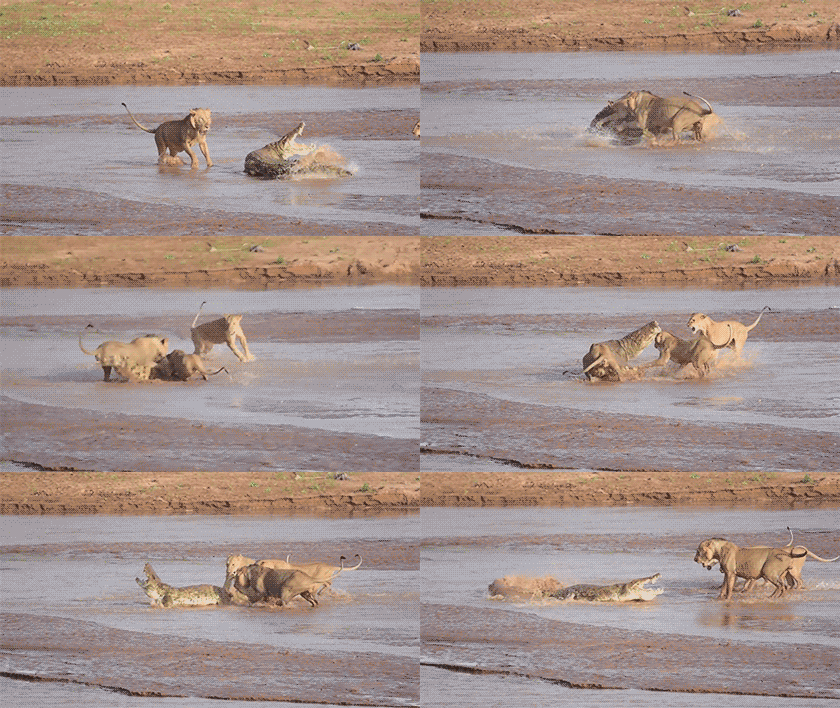
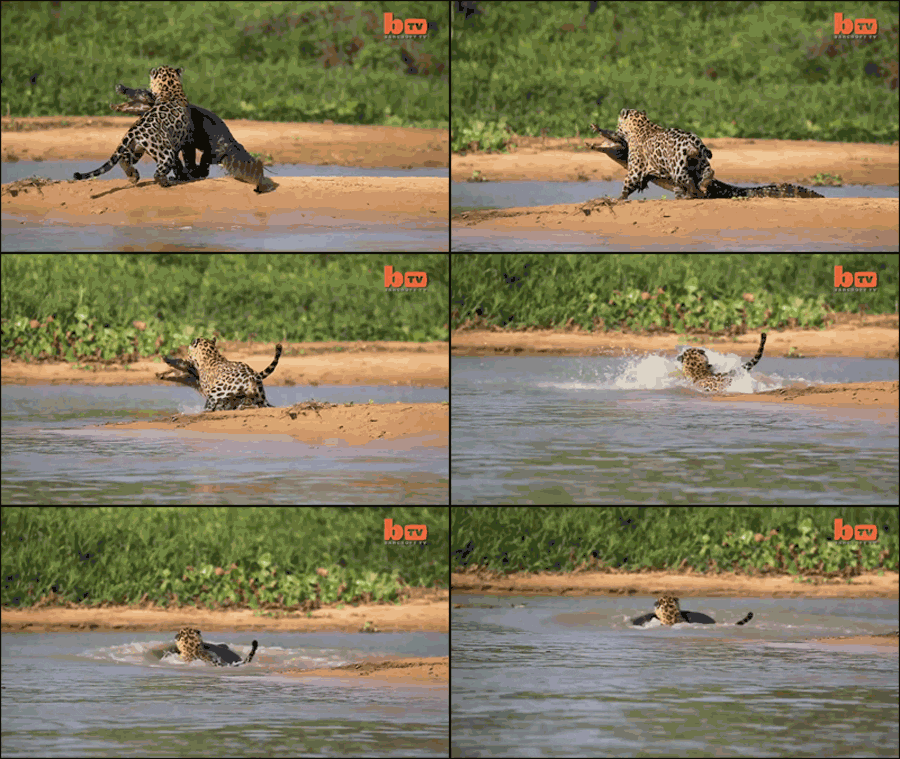
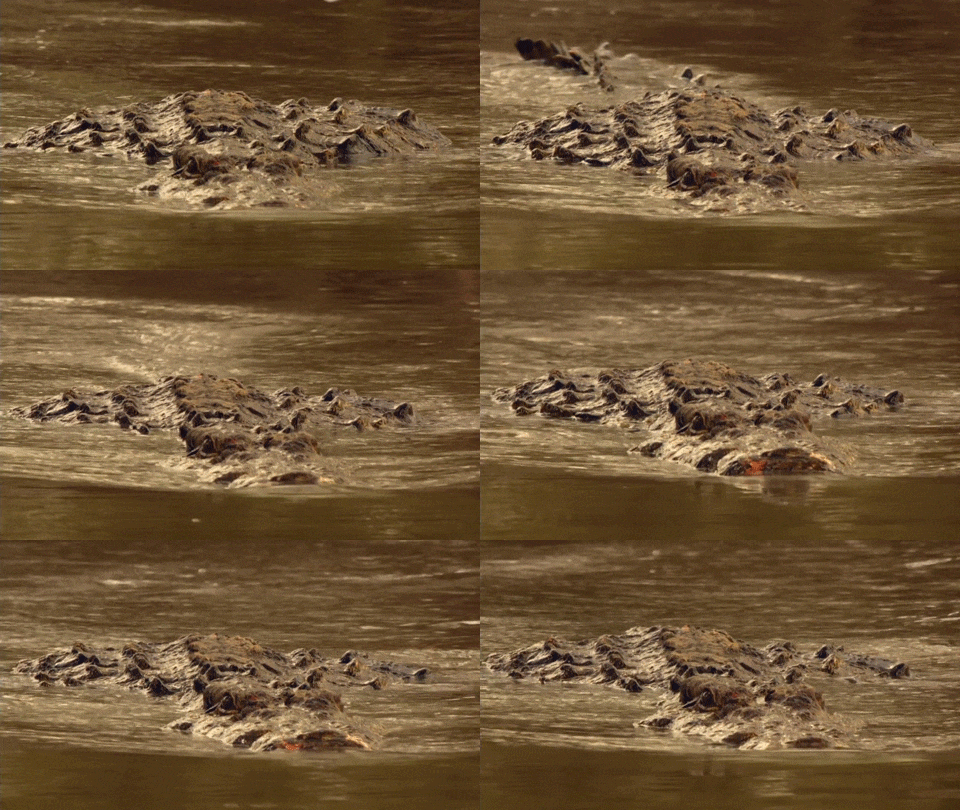
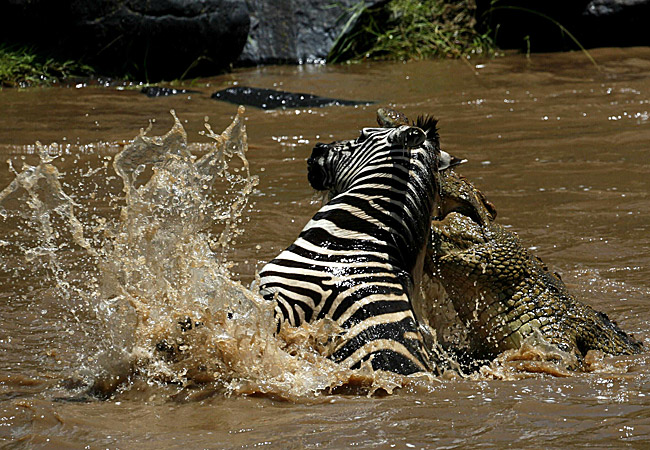
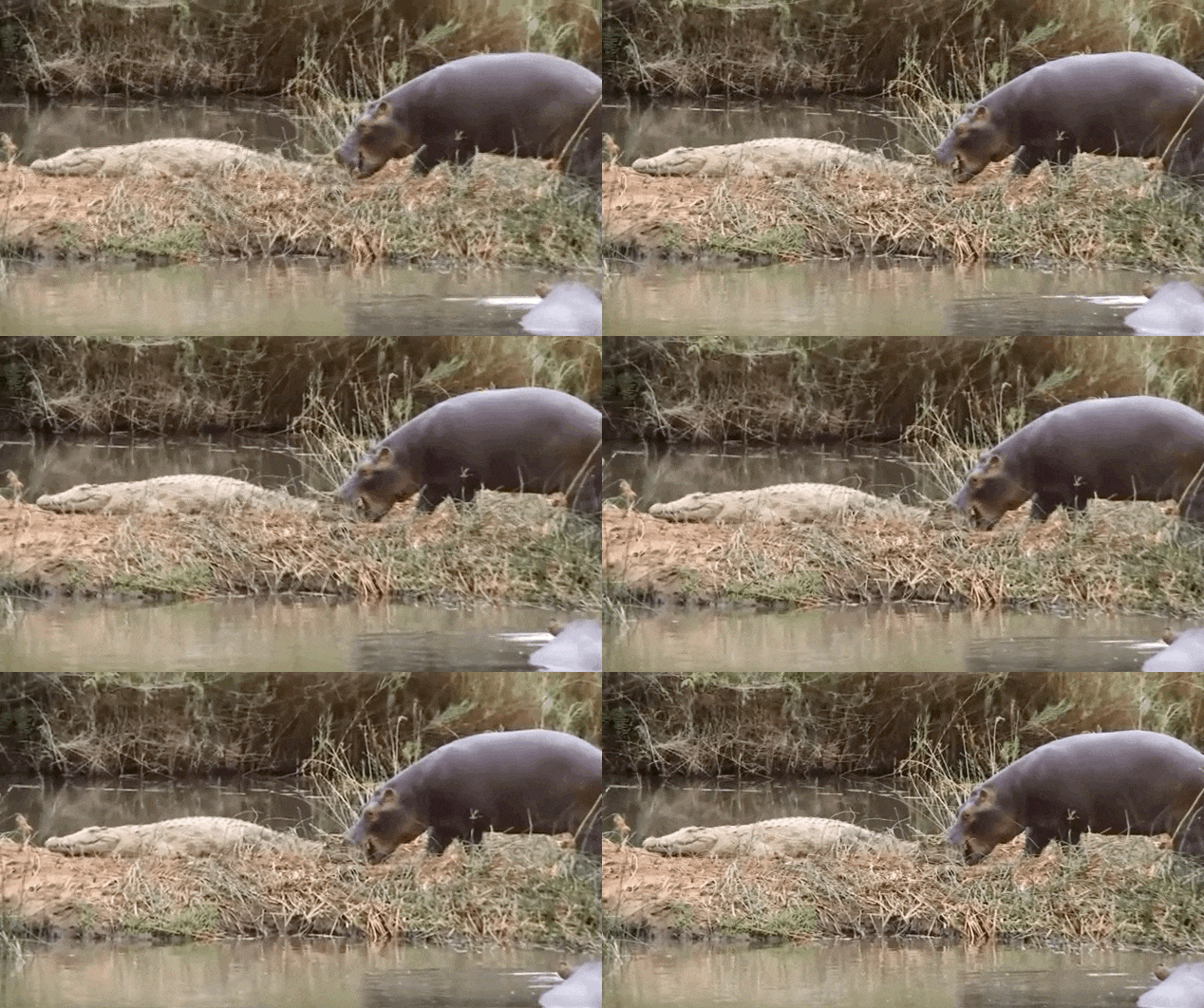
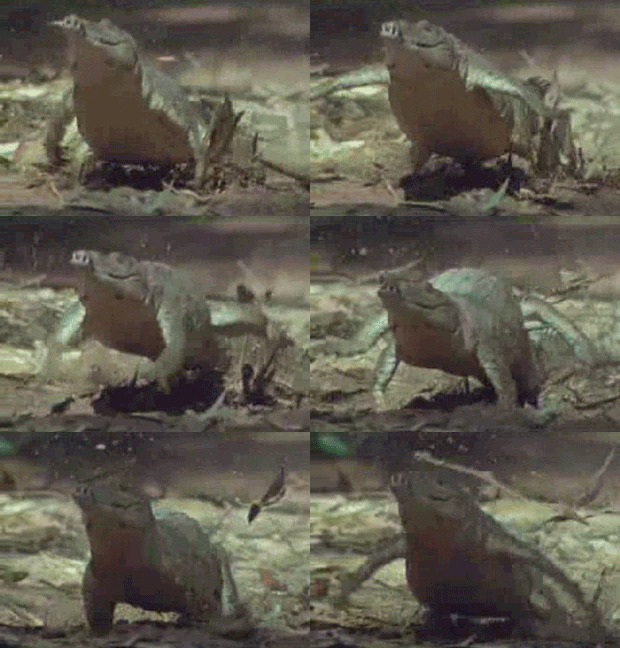
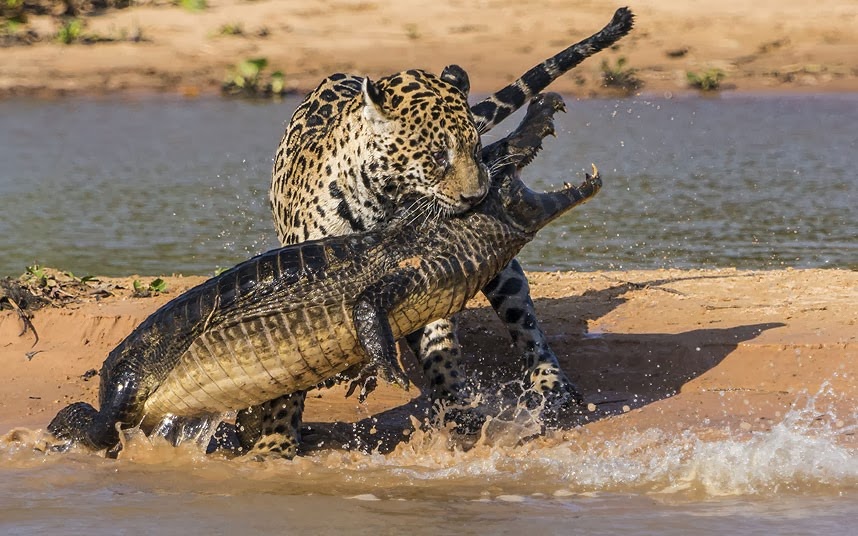
Nature can be a series of violent encounters


Image result for alligator gif

Image result for alligator gif


Image result for alligator gif

Image result for alligator gif

Image result for alligator gif


Image result for alligator gif

Image result for alligator gif


http://www.proxvost.info/photo/wild/jaguar/jaguar_kartinki_03.jpg


http://www.proxvost.info/photo/wild/jaguar/jaguar_kartinki_01.jpg


ягуар


ягуар


Monday, November 7, 2016

Sarus Crane


Sarus-Crane


Sarus Crane

The large Sarus Crane is the only resident crane of Indian Subcontinent mostly found in south to the Godavari River, west to coastal Gujarat,Punjab,east to West Bengal and Assam.

Sarus Crane is the largest of Indian cranes with a maximum height of about 5.9 ft making them the world’s tallest flying bird.

The population of Sarus Crane is declining in the country so falls in the category of endangered species of bird in India. 

Sarus Crane species was a close contender to the Indian Peafowl as the national bird of India.


Source: http://www.walkthroughindia.com/wildlife/top-10-most-beautiful-birds-of-indian-subcontinent/


Saturday, November 5, 2016

Two Red-crowned cCranes


 Image result for japanese wood block print of kingfisher
 Two red-crowned cranes, one about to land in a marsh


 Thumbnail of Original Japanese Woodblock Print by
Shoson   
Shoson Two Cranes In Shallow Water


Image result for japanese wood block print of kingfisher
 

 Japanese Woodblock Art Two Cranes Ohara Koson


Sunday, September 25, 2016

How Australians hunted crocodiles in 1949


Published on Apr 7, 2016

From the Film Australia Collection. Made by the National Film Board 1949. Directed by Lee Robinson. In the estuaries and lagoons of the Northern Territory, freshwater and saltwater crocodile are hunted for their hides by both Indigenous and non-Indigenous hunters. This film shows Aboriginal people using age-old hunting techniques to land crocs either for food or for skins. The methods employed by the professional hunters, who earn as much as 3000 pounds during the season, are also depicted, followed by a brief look at how the hides are skinned and prepared before being transported to the leather factories of Sydney and Melbourne.


http://amara.org/v/IKr1/


Incredible video shows how Australians hunted crocodiles in 1949


282dffae35fc480f85c75d3f84c70631

A non-Indigenous hunter looks out for crocodiles.
Image: NFSA
It's a long way from the time of Crocodile Dundee, but new footage is giving insights into the origin of the crocodile hunter.
To time with the 30th anniversary of the release of the iconic Australian film, the National Film and Sound Archive (NSA) released this incredible vision from 1949.
The government film, directed by acclaimed director Lee Robison, documents the involved process of killing crocodiles in the lagoons of the Northern Territory.
"These rivers and billabongs are home of the crocodile: cunning, ferocious killer, frightened of nothing on land or in the water," the British narrator said. "Sometimes it's a lonely life and sometimes dangerous but, for a man with the courage to do battle with the man-eaters, there are rich rewards."
In this era, crocodiles were hunted by Indigenous and non-Indigenous hunters. This film contrasts the traditional methods used by the Indigenous hunters with the use of shotguns by white men.
The Daly River's Brinkin tribe shown in the documentary hunt crocodiles as a food source, using harpoons, bamboo and their own bare hands. The crocodiles caught by the non-Indigenous hunters are for the leather hides, which are then skinned, prepared and transported to factories in capital cities. 
"The Aborigines have perfected many hunting techniques and the cunning crocodile is outsmarted every time by the skill of master hunters," the narrator said. "The professional crocodile hunters who now shoot along the rivers of the north, use different methods and more modern equipment than the Aborigines. They kill for leather skins and not for food."
NFSA's Richard Carter told ABC Darwin radio it is interesting that you get to see in a film from this time both the Indigenous way and the white way, but he believed it was a film to promote Australian industries to the country. 

"It's an interesting contrast," Carter said. "For a film so early, you don't always get that complete picture of what's going on, but in this you get to see all sides."


[h/t ABC News]
Have something to add to this story? Share it in the comments.


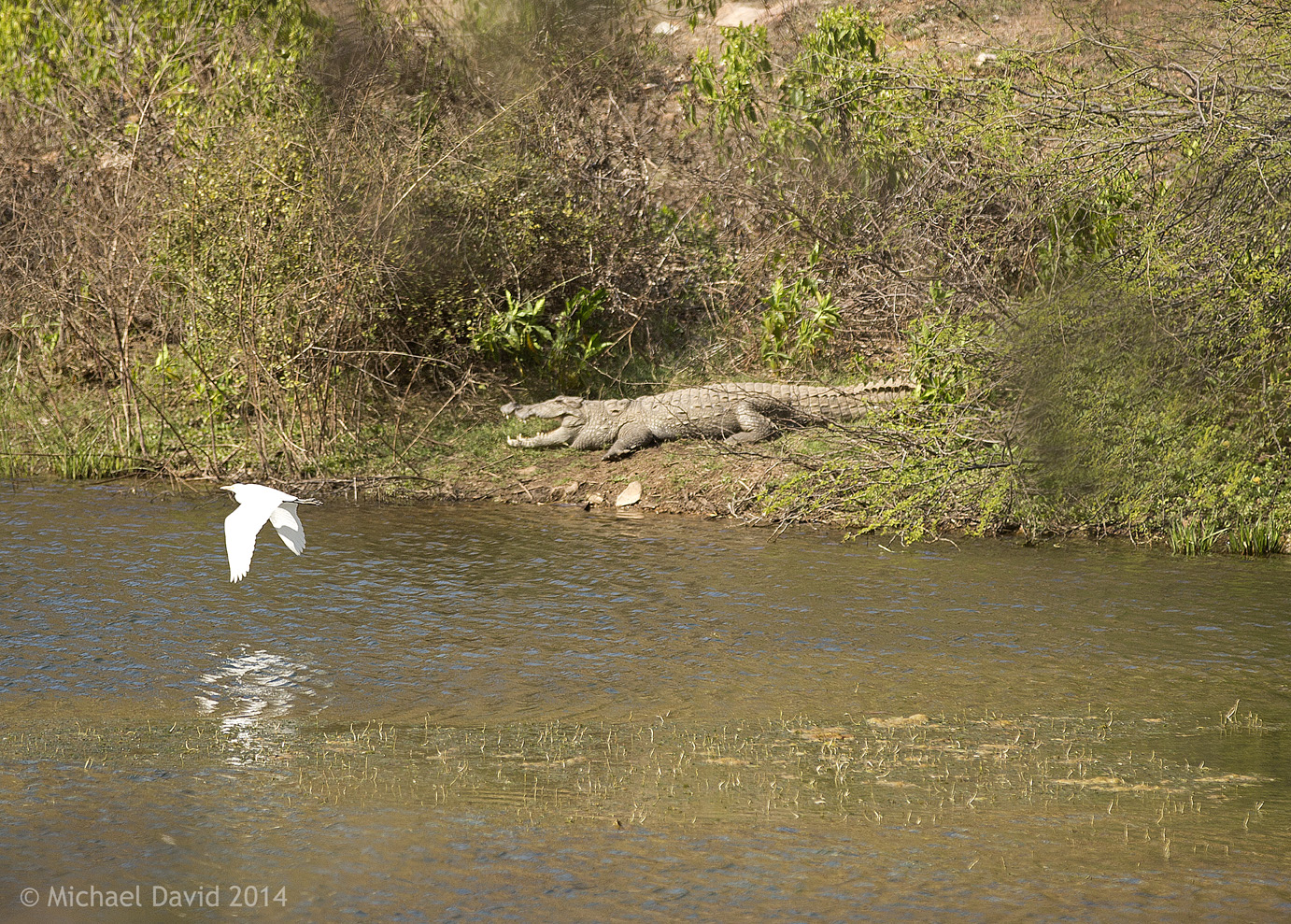
Crocodile, Ranthambore National Park, India

Image result for natural wonders of india
Crocodile, Ranthambore National Park, India


Friday, May 27, 2016

Killer Nile Crocodiles in Florida


 05_25_Nile_crocodile_Florida

Killer Nile crocodiles in Florida? Experts say it's possible


FORT LAUDERDALE, Fla. (AP) —

Step aside, Burmese python — you may no longer be Florida's scariest invasive species.

Researchers have confirmed that three Nile crocodiles were captured near Miami, and they say it's possible more of the man-eating reptiles are still out there, although no one can say for sure.

The big question now: How did they get to Florida?


"They didn't swim from Africa," University of Florida herpetologist Kenneth Krysko said. "But we really don't know how they got into the wild."

Krysko and his co-authors just published a paper showing that DNA testing proved the three animals captured in 2009, 2011 and 2014 are Nile crocs, a species whose males grow to over 16 feet long and weigh upward of 1,600 pounds. Nile crocs are believed to be responsible for up to 200 fatalities annually in their native sub-Saharan Africa. Compare that with an annual average of six reported shark attack deaths globally.

Krysko, who works at UF's Florida Museum of Natural History, said the captured crocodiles matched genetically, meaning they are related to one another, but didn't match Nile crocs kept at Disney's Animal Kingdom and other licensed Florida attractions. That means the crocs probably were brought to Florida illegally by an unlicensed reptile collector who either didn't contain them properly, allowing them to escape, or, more sinisterly, planted them in the Everglades in hopes they would multiply.

The Nile croc, if it became established in the Everglades, would pose another invasive threat to its teetering ecosystem. Through crossbreeding, they could endanger the smaller, less aggressive American crocodiles, which have never been responsible for a confirmed human death in the U.S. About 1,000 American crocodiles live in South Florida, mostly in mangroves and estuaries. Any hybrids would degrade the genetic integrity of the endangered American variety.

Nile crocs also are known to attack livestock, which would be bad news for cattle farms that border the Everglades.

Krysko and two co-authors, independent wildlife biologist Joe Wasilewski and UF wildlife ecology professor Frank Mazzotti, think more Nile crocs lurk unfound in the Everglades, but they aren't certain.

Allyson Gantt, a spokeswoman for Everglades National Park, where one of the reptiles was found, disagrees, saying no Nile crocs still roam the park.

Some Everglades visitors might not be aware of the differences between crocodiles and alligators, complicating efforts to confirm any remaining crocs. Crocodiles have angular snouts, and their lower teeth are exposed when their mouths are closed. Alligator snouts are rounded, with few exposed lower teeth. Nile crocs are usually bronze or brownish yellow; alligators are blackish green.

Wasilewsi said people are likely to notice the difference, or at least take photos that researchers can check later. And no, crocs and alligators can't interbreed.

Florida already has more non-native amphibians and reptiles than any region worldwide, according to the UF paper, published April 30 in Herpetological Conservation and Biology. They include Burmese pythons, a menace that quickly reproduced into the thousands and is decimating the Everglades' small mammal population.

Giant toads, iguanas and another species of crocodilian, the spectacled caiman, also live in the state. But that species grows to only about 80 pounds and feeds on fish, crustaceans and the occasional small mammals.

All three Nile crocodiles were captured in extreme South Florida.

— The first, a hatchling, was found on a front porch and sent to a Louisiana reptile exhibit.

— The second, a female measuring 4 feet, was captured at a park. Wasilewski kept it, but later gave it to another licensed researcher.

— The third was captured twice. The first trapper didn't have the proper permit, so he released the female. The croc was recaptured two years later 18 miles away by water in Everglades National Park. It was euthanized.

The UF paper said all Florida wetlands and coastal areas of Alabama, Mississippi, Louisiana and Texas would be hospitable to Nile crocodiles. They require fresh water, abundant prey and year-round warm weather.

"Doesn't that sound like Florida?" Krysko said.

Fortunately, Nile crocodiles don't reproduce rapidly. Still, the researchers said, it might only take one adult male and female finding each other for an Everglades population to become established.

"I have two words: Burmese python," Wasilewski said. "If you would have told me 15 years ago we would have an established population in the Everglades, I wouldn't have believed you."


Follow Terry Spencer on Twitter at —https://twitter.com/terryspen.
His work can be found at —http://bigstory.ap.org/author/terry-spencer.

Thursday, May 26, 2016

Eyelids of the Morning book trailer


Published on Jun 22, 2013
Buy it now! http://heidipeltier.wix.com/squalo

Follow Heidi Peltier on facebook and twitter.


Ethan is a sixteen-year-old boy who, with his twelve-year-old brother Rory,
reluctantly leaves his boarding school for the summer to be dragged to
the other side of the world by their reclusive and eccentric uncle. When
their uncle finally explains that he is hunting for a true, living
dinosaur in the heart of the Congo River basin, Ethan immediately pegs
him for a lunatic. However, using documented eyewitness accounts, a
vivid description of dinosaurs from the Bible, and, his most powerful
weapon, news that Ethan and Rory's late mother believed that dinosaurs
exist too, their uncle has them convinced. They journey to the Congo and
meet Shari, a missionary nurse, and her adopted daughter Maggie whose
passion for the plight of the Congolese people leaves Ethan instantly
smitten. Their dinosaur hunt leaves Ethan, Maggie and Rory separated
from their group, facing danger at every turn, and racing against the
clock to get medical help for a serious injury. In the end, they make
the discovery and sacrifice of a life time, the emotional gap between
the boys and their uncle is finally bridged, and Ethan learns that home
truly is where the heart is.